
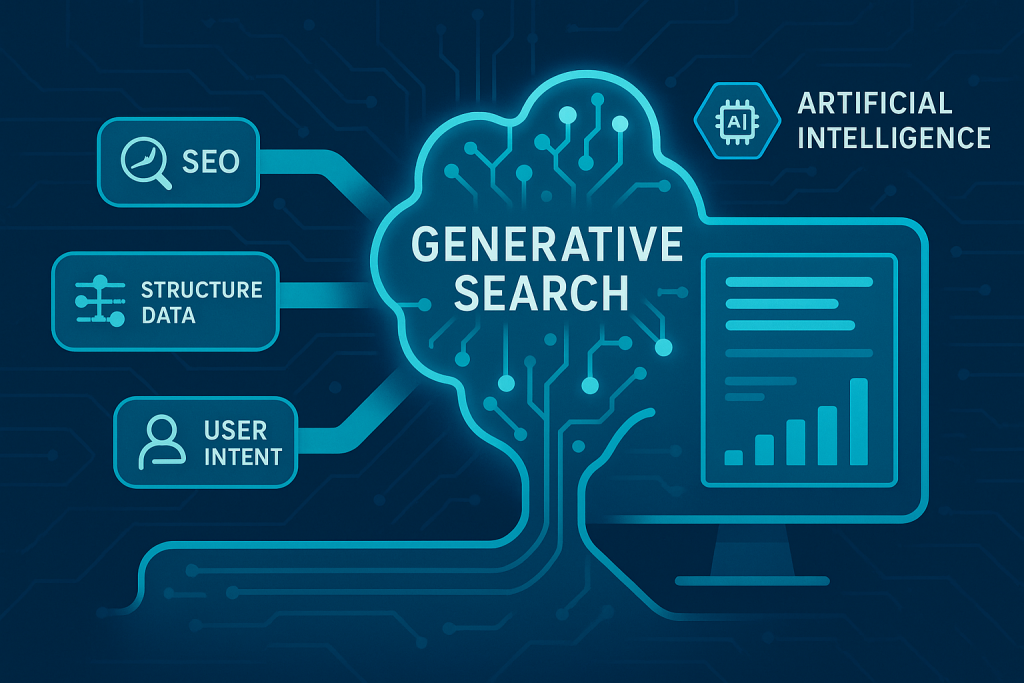
Why SEO Alone Won’t Cut It Anymore
Search engines are no longer just engines — they’re becoming minds.
With the rise of generative AI platforms like ChatGPT, Google’s SGE (Search Generative Experience), Perplexity, and Gemini, how users search is fundamentally shifting. Rather than scrolling through 10 blue links, people are getting direct answers synthesized from multiple sources. That means your content needs to be read and understood by AI models, not just indexed by a search engine.
This is where Generative Engine Optimization (GEO) enters the spotlight.
If your brand isn’t GEO-ready, you risk becoming invisible to the next generation of search engines — the ones that generate.
What Is Generative Engine Optimization (GEO)?
Generative Engine Optimization (GEO) is the practice of optimizing digital content to be accurately understood, cited, and surfaced by generative AI engines. Instead of targeting just rankings in traditional search engine optimization, GEO focuses on helping AI systems select your content when answering user queries.
Think of it as the new SEO — but for AI.
A traditional search engine shows links. A generative search engine delivers answers. And if those answers don’t include your content? You’re out of the conversation.
How Generative Engines Work
Unlike traditional ranking algorithms, AI search engines like ChatGPT and Gemini use natural language models, AI algorithms, and machine learning to scan vast amounts of content, interpret context, and generate real-time answers.
Here’s how GEO fits in:
- AI systems detect user intent using conversational cues.
- They retrieve relevant information from multiple sources — prioritizing accuracy, clarity, and trust.
- They summarize and respond using fluency optimization to mimic human-like tone and depth.
To show up in that generated response, your content must:
- Match user queries semantically (not just via keywords).
- Demonstrate authority with facts, statistics, and technical terms.
- Be structured for machine readability — think headers, bullet points, and schemas.
GEO vs. Traditional SEO: What’s the Difference?
| Traditional SEO | Generative Engine Optimization (GEO) |
| Keywords matter most | Semantic relevance is key |
| Link-building drives rankings | Content depth and structure fuel inclusion |
| Meta tags support ranking | Context clarity supports AI comprehension |
| SERPs dominate | Zero-click answers dominate |
GEO isn’t replacing SEO — it’s expanding itto meet the needs of evolving search behavior.
How to Optimize for GEO
Ready to show up in generative search results? Here are practical GEO strategies:
- Write for AI and Humans
- Keep language clear and structured.
- Use bullet points, numbered lists, and descriptive headers.
- Address specific user intent (e.g., “how,” “why,” “best tools”).
- Use Data to Build Authority
- Include recent statistics, expert quotes, and citations.
- Reference ai tools, industry benchmarks, or real-world applications.
- Optimize for Structure and Semantics
- Leverage structured data (like FAQ schema and how-to markup).
- Avoid keyword stuffing, but apply keyword optimization using synonyms and related terms.
- Ensure Topic Depth
- Cover related concepts such as ai platforms, ai technology, and generative ai models to signal subject matter expertise.
- Focus on “Answer-Ready” Formats
- Use conversational tone for question-based content.
- Make your content suitable for generative engine responses (short, factual, referenceable).
Why GEO Matters for Content Creators and Marketers
For content creators, GEO isn’t just a technical strategy — it’s a survival tool.
As AI generated content reshapes the web, and search engines evolve into AI engines, GEO ensures your voice is heard. If your content is optimized for generative ai engines, you increase visibility in answers — not just rankings.
It’s also a safeguard against being misquoted or overlooked by LLMs using your content incorrectly. The more structured, accurate, and optimized your work is, the better it will be represented.
TLDR Summary
Generative Engine Optimization (GEO) helps your content appear in AI-generated answers, not just search results. With generative engines like ChatGPT and Google SGE changing how people interact with content, GEO is the key to remaining visible, relevant, and competitive. GEO is not a trend — it’s the future of digital visibility.
Contact Insite Adviceto discover how our team can help you prepare for the AI-powered future of search.